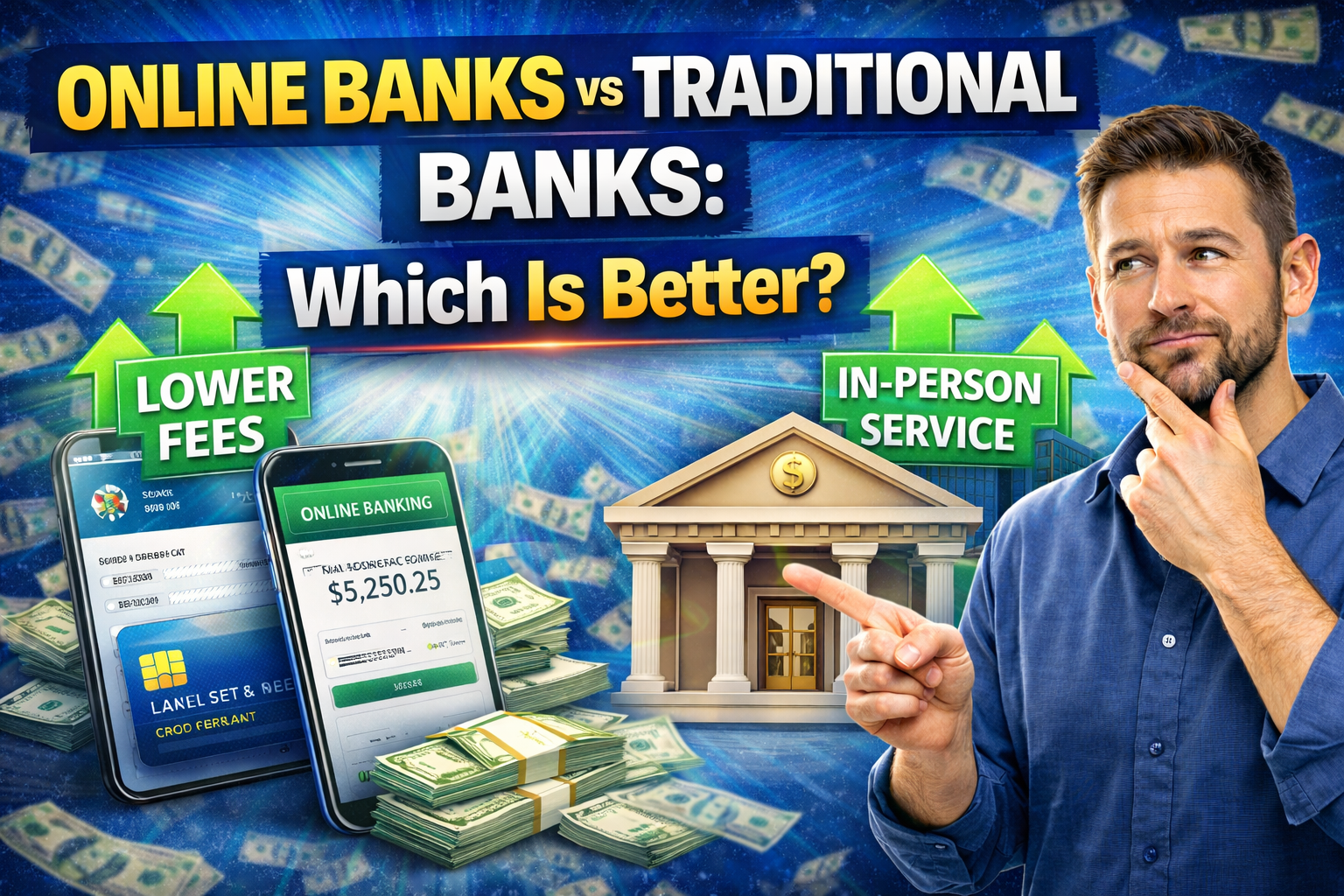
Choosing between an online bank and a traditional bank is an important financial decision. Both types of banks offer similar services like checking accounts, savings accounts, and loans, but they operate very differently.Online Banks vs Traditional Banks: Which Is Better.
Online banks operate entirely through mobile apps and websites, while traditional banks have physical branches you can visit in person. Each option has advantages and disadvantages depending on your financial needs and preferences.
In this guide, we’ll compare online banks vs traditional banks, including fees, interest rates, convenience, and security.
What Is an Online Bank?
An online bank operates primarily through the internet. Customers manage their accounts through mobile apps or websites without visiting a physical branch.
Typical features of online banks include:
- Mobile banking apps
- Online account opening
- Digital transfers and bill payments
- Customer service through chat, email, or phone
Because online banks don’t maintain physical branches, they have lower operating costs, which allows them to offer higher interest rates and fewer fees compared to traditional banks.
What Is a Traditional Bank?
A traditional bank (also called a brick-and-mortar bank) has physical branches where customers can meet bankers, deposit cash, or get financial advice.
Typical services include:
- In-person banking support
- ATMs and branch locations
- Loan and mortgage services
- Business banking services
Traditional banks provide a more personal banking experience, which many customers prefer when dealing with complex financial products.
Key Differences Between Online and Traditional Banks
| Feature | Online Banks | Traditional Banks |
|---|---|---|
| Branch Access | No physical branches | Physical branches available |
| Fees | Usually low or no fees | Often charge maintenance fees |
| Interest Rates | Typically higher savings rates | Usually lower savings rates |
| Customer Support | Phone, chat, email | In-person support |
| Cash Deposits | Sometimes difficult | Easy at branches or ATMs |
Online banks often provide higher APYs on savings accounts and lower fees, while traditional banks offer easier access to cash and face-to-face service.
Advantages of Online Banks
1. Higher Interest Rates
Online banks frequently offer much higher savings rates because they have fewer operational expenses.
Some high-yield online savings accounts can reach around 4–5% APY, significantly higher than typical traditional bank rates.
2. Lower Fees
Many online banks offer:
- No monthly maintenance fees
- No minimum balance requirements
- Lower overdraft fees
These cost savings are passed to customers because online banks don’t have the expenses of running physical branches.
3. Convenient Digital Banking
Online banking allows customers to:
- Check balances anytime
- Transfer money instantly
- Deposit checks using mobile apps
- Pay bills online
This makes online banks extremely convenient for people who prefer managing finances digitally.
Advantages of Traditional Banks
1. In-Person Customer Support
Traditional banks allow customers to:
- Speak with bankers directly
- Get help with complex financial issues
- Discuss loans or mortgages face-to-face
Many people prefer this personal interaction when dealing with large financial decisions.
2. Easier Cash Deposits
One major drawback of online banks is depositing cash.
Traditional banks make it easy to:
- Deposit cash at branches
- Use ATMs that accept deposits
Online banks may require workarounds such as using partner ATMs or transferring funds from another bank.
3. Wider Range of Services
Traditional banks often provide additional services like:
- Business banking
- Investment advice
- Mortgage consultations
- Safe deposit boxes
These services may not always be available through online-only banks.
Potential Downsides of Each Option
Online Bank Drawbacks
- No physical branches
- Cash deposits can be difficult
- Customer service is usually remote
Traditional Bank Drawbacks
- Higher fees
- Lower savings interest rates
- Limited banking hours
Traditional banks also have higher operating costs, which often lead to lower interest rates and higher account fees.
Are Online Banks Safe?
Yes. Most online banks in the U.S. are FDIC-insured, meaning deposits are protected up to $250,000 per account holder—the same protection offered by traditional banks.
This means your money is just as safe at a reputable online bank as it is at a traditional bank.
Which One Is Better?
The best option depends on your banking habits.
Online Banks Are Better If You:
- Want higher savings interest rates
- Prefer mobile banking
- Want fewer banking fees
- Rarely deal with cash
Traditional Banks Are Better If You:
- Prefer face-to-face customer service
- Deposit cash frequently
- Need complex financial services
- Want access to physical branches
Many people actually use a combination of both — keeping a traditional bank account for cash deposits while using an online bank for high-yield savings.
Final Thoughts
Both online banks and traditional banks have unique advantages.
Online banks offer higher interest rates, lower fees, and convenient digital tools, making them ideal for tech-savvy customers.
Traditional banks, on the other hand, provide in-person service, easier cash deposits, and a wider range of financial services.
The best choice depends on your personal financial needs and how you prefer to manage your money.